Hiển thị các bài đăng có nhãn Blazing Comics. Hiển thị tất cả bài đăng

Người đăng: Unknown on Chủ Nhật, 18 tháng 10, 2009


Number 612


Turtle Power


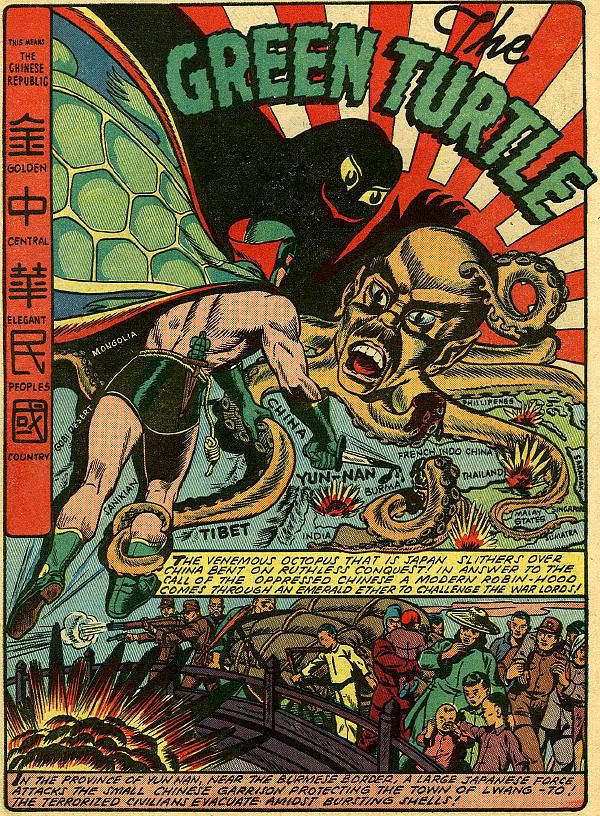
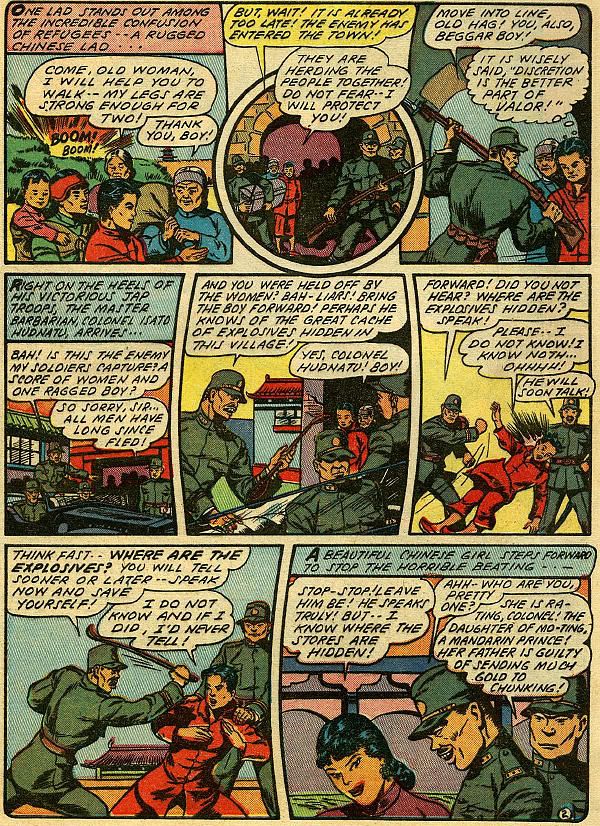
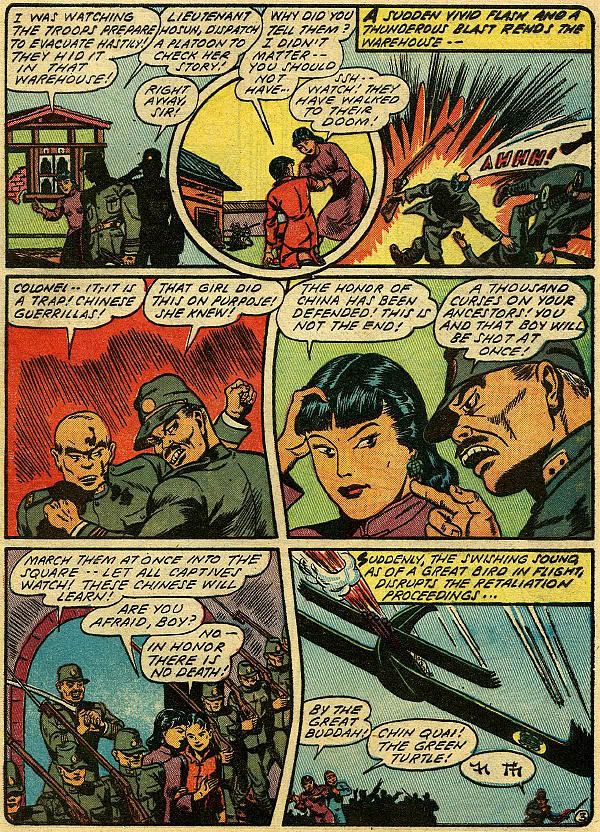
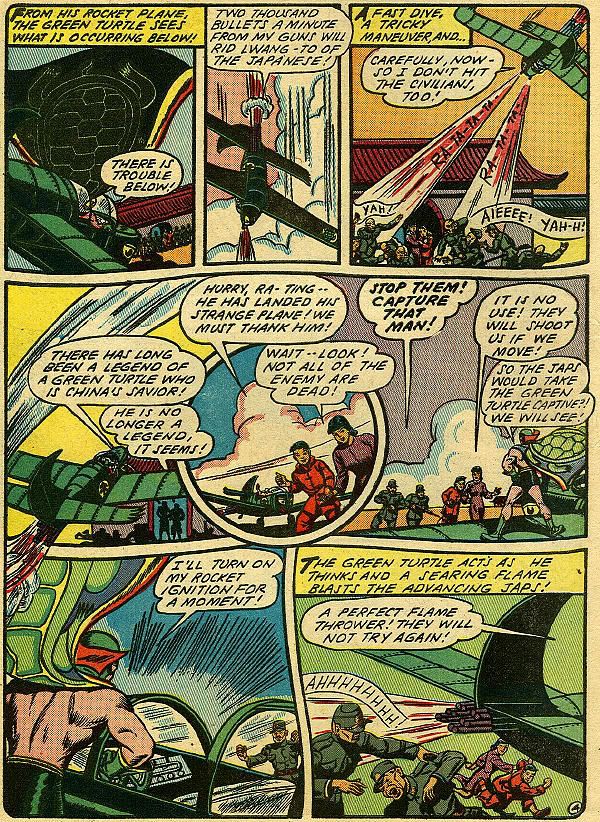
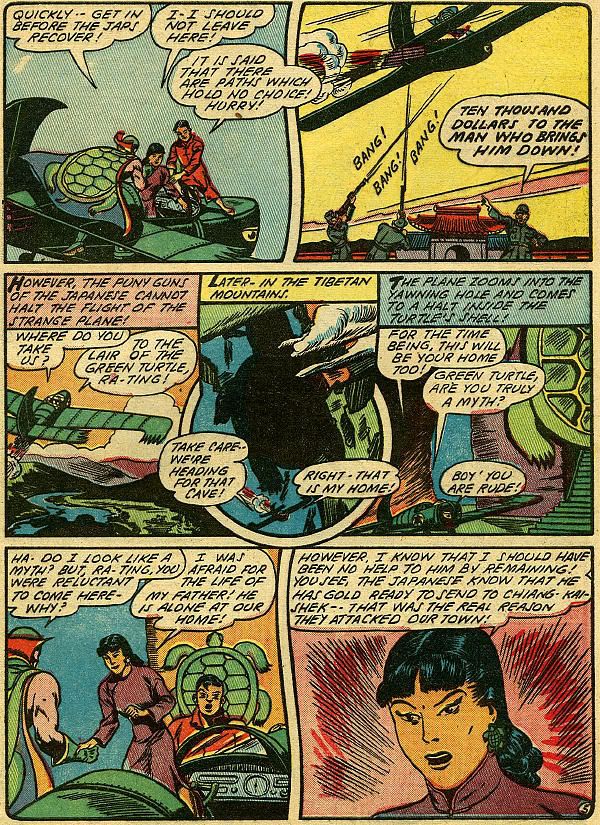
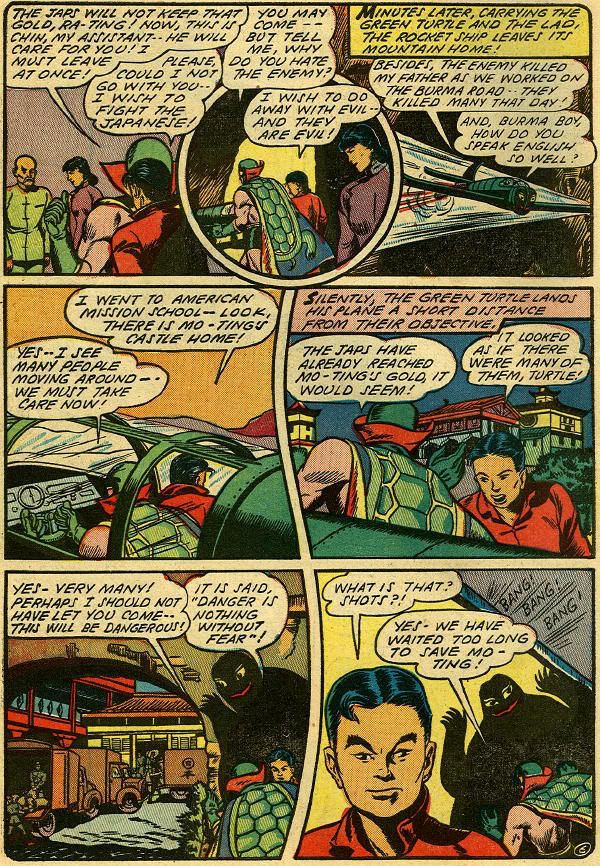
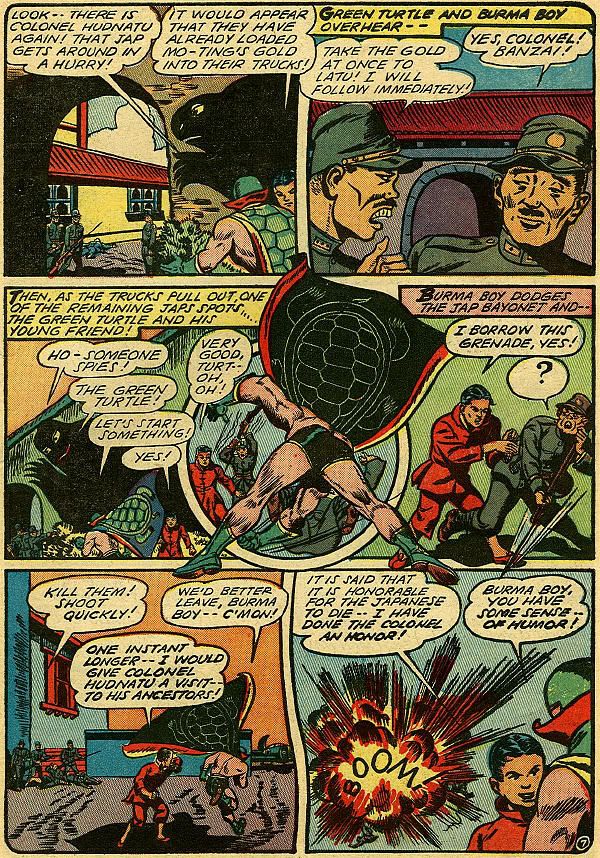
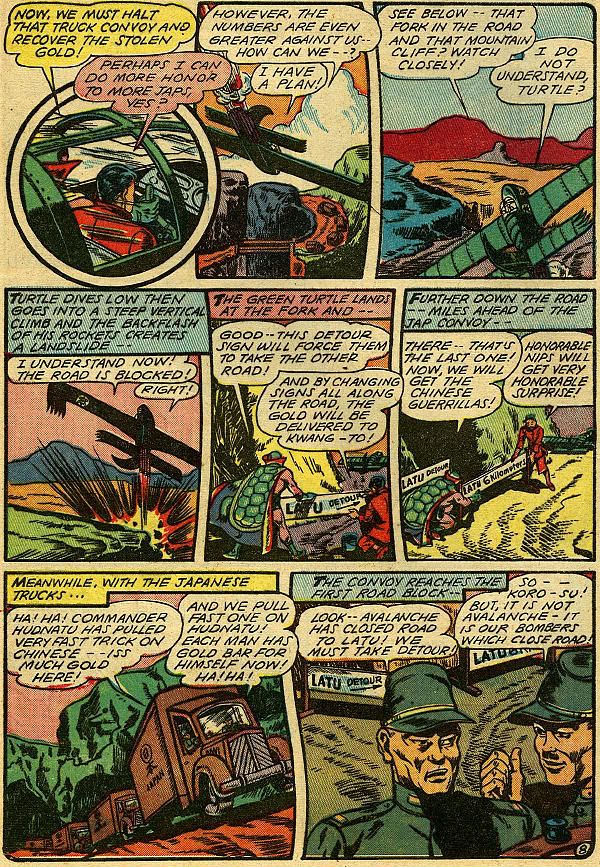
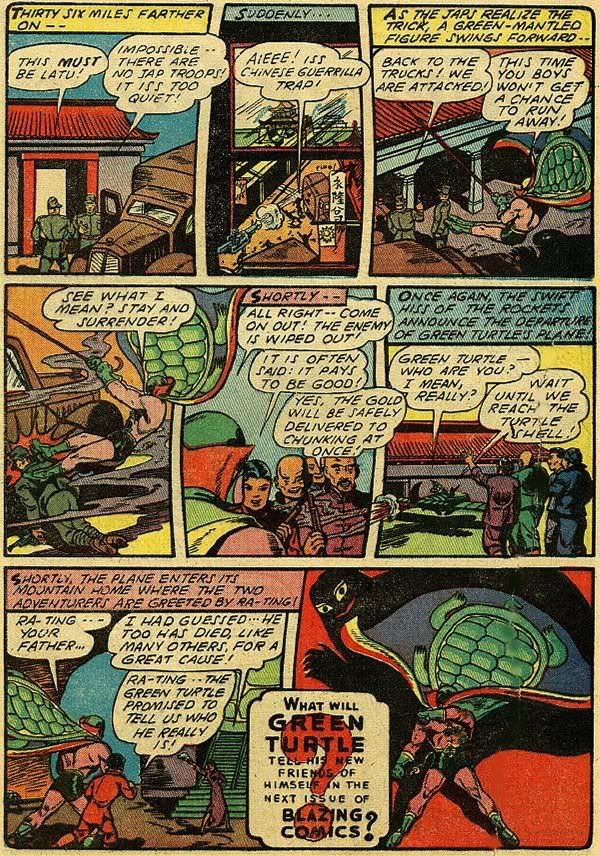
In order to show you this Green Turtle story from Blazing Comics #3, I had to go back into my own archives to read what I said in 2007 when I showed you the Turtle story from Blazing #1. You can read Pappy's #221 yourself. Or I can tell you that Green Turtle was a hero by a Chinese-American artist, Chu Hing, who wanted Green Turtle to be Chinese. The publishers felt differently, so Chu hid the character's face from us, instead showing us a weird shadow with eyes. That bit of symbolism is odd enough to be attention-getting, even if the story seems to be routine World War II fare.

Blazing Comics was short-lived, and thus died the Green Turtle's comic career. He's an interesting character if only for the circumstances surrounding his creation. I don't know if artist Chu Hing continued on in comic books or not. I wonder how many Asian artists worked in the industry in its early days. I can think of prolific letterer Ben Oda; There was artist Bob Fujitani, who was half Japanese. The Filipino artists made their marks in the 1970s. In recent years there have been many more opportunities for artists, but at one time, with rare exceptions, comic books were a white boys' club.


More about

Người đăng: Unknown on Thứ Ba, 20 tháng 11, 2007


Number 221


The Green Turtle


This story is by request. It's the first Green Turtle story from Blazing Comics #1* from 1944.

Rural Home was the publisher, and as far as I can tell, ultimately not a successful one. Since it was set up during the war when paper was rationed, they probably had ties to an established publisher with access to paper. About any comic printed sold in those days. There's another reason for calling it the golden age: Publishing comic books during the war was a golden opportunity to bring in the gold! After the war a peripheral publisher like Rural Home fell apart.

What I know about the creation of the character Green Turtle is hearsay, unless I missed some confirmation somewhere: The story is that a Chinese-American named Chu Hing created Green Turtle as a Chinese superhero, fighting the Japanese in China. Stories of Japanese atrocities in China were well documented. The publisher felt that a Chinese superhero wouldn't go over with American--read, white--readers. The creator came up with the idea of turning his hero's face from view, substituting that odd shadow with eyes. It makes for a striking visual, but could have confused the readers.

The Green Turtle was interesting enough for a cartoonist named Gary Terry. who revived the character for his digest-sized, black-and-white comic book, Atom, Robot Adventurer, in 1975. Here's the splash page for the strip, done up with some kinky gals, and signed with the pseudonym, Stag Fury.I think The Green Turtle is a bad name for a hero. I can't imagine kids of that era going for a hero with that name when comics starring Captain America, Superman, Batman, Captain Marvel, The Flash, to name just a few, were around to compete for their dimes.

Page 1 / Page 2 / Page 3 / Page 4 / Page 5 / Page 6 / Page 7 / Page 8 / Page 9

*"Jun-Gal," another story from Blazing Comics #1, was posted in Pappy's #179.

More about

Người đăng: Unknown on Thứ Tư, 22 tháng 8, 2007


Number 179


Average White Goddess


Jun-Gal is from Blazing Comics #1, 1944. Blazing Comics is probably known for its cover feature, The Green Turtle, one of the few Golden Age comic book heroes--maybe the only one?--created and drawn by a Chinese-American, Chu Hing.

Jun-Gal is notable for at least a few reasons: The horrible pun name. The artwork, which is more suitable to the 1920s than the 1940s, and the racial attitudes, which permeate the story.

Jun-Gal's "real" name (in the story, anyway) is Joan Teal. Teal is Mrs. Pappy's maiden name, so that made me sit up and take notice.

As drawn, Joan is a beautiful blonde girl in a sarong. They were going for the Dorothy Lamour look, which was hugely popular during World War II. While Sheena and others went around in animal skins, Jun-Gal wore her sarong. Jun-Gal is given powers of strength from the "Pit Of Death," an ever-burning hole full of radium. Apparently it doesn't affect the black people the same way. Because she's blonde, she becomes the queen, the goddess figure to the superstitious and uneducated natives. Maybe African-Americans of the era viewed this sort of thing with trepidation, but to white America it was pretty much business as usual with attitudes toward "coloreds." Tarzan movies were made up of this sort of stereotyping. The natives are cruel, stupid, superstitious and treacherous. The whites, just by virtue of their race, are made to be masters over the blacks.


What's most interesting to me is the racial viewpoint. This is standard fare for the era. The characters are stock. The blacks are "natives;" not Africans, just "natives." They have bulging lips drawn in a minstrel style. The white people are set upon and the parents killed by the "bad natives." Joan is raised by her "mammy," in the midst of the village of her parents' killers.

I'm presenting this as it was, over 60 years ago. The irony isn't lost on us that when this was published we were fighting an enemy whose philosophy of superiority was repugnant to us. But it was repugnance in words, not deeds. Over in morally superior America we felt it was OK to discriminate based on race, all the while excoriating our enemies for doing the same.

OK, that was then, this is now. I've climbed down from my soapbox. Blazing Comics was short-lived, only five issues, and I own only the first issue. I can't tell you if Jun-Gal lasted for the entire run. The Comic Book Price Guide doesn't help, and the Grand Comics Database doesn't even list Blazing Comics. I don't know what happened to Jun-Gal after her origin story, and I don't know who wrote or drew her adventure(s). That's really a lot I don't know about Jun-Gal, isn't it?


More about